Blog

Self-Funded Strategy

How to decide, design and run a self-funded health plan, from stop-loss to direct contracting.

The MOC Academy is open at MOClearn.com, ten programs and 184 hours of training for self-funded health plans
The MOC Academy is open at MOClearn.com with ten programs and 184 hours of training for the self-funded community. Two of the courses are free.
October 26, 2026
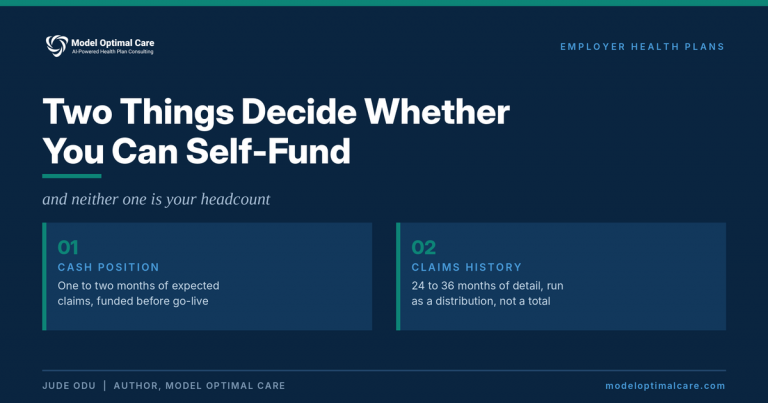
Two Things Decide Whether You Can Self-Fund, and Neither Is Your Headcount
Every self-funding conversation starts with the same question. Are we big enough? It is the wrong one, and it has been for a while. Sixty-seven percent of covered U.S. workers are already in self-funded plans. Two things actually decide whether a transition works, and neither one is your headcount.
August 19, 2026
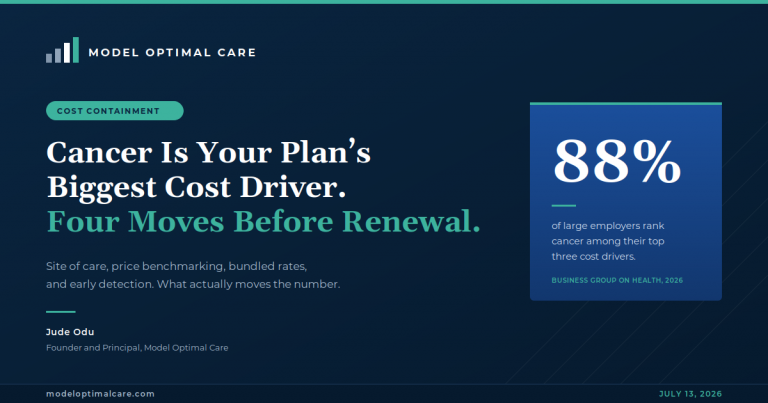
Model Optimal Care infographic: Cancer Is Your Plan's Biggest Cost Driver. Four Moves Before Renewal. 88% of large employers rank cancer among their top three cost drivers (Business Group on Health, 2026)
For the fourth year running, cancer is the top condition driving cost in employer health plans. Eighty-eight percent of large employers now rank it among their top three. Raising a deductible does not change what your plan pays for an oncology episode. It changes who writes the first check. Here are four moves to make before your next renewal: find where the dollars actually go, benchmark drug prices against public data, build a Center of Excellence path, and treat cancer screening as a cost strategy.
July 12, 2026
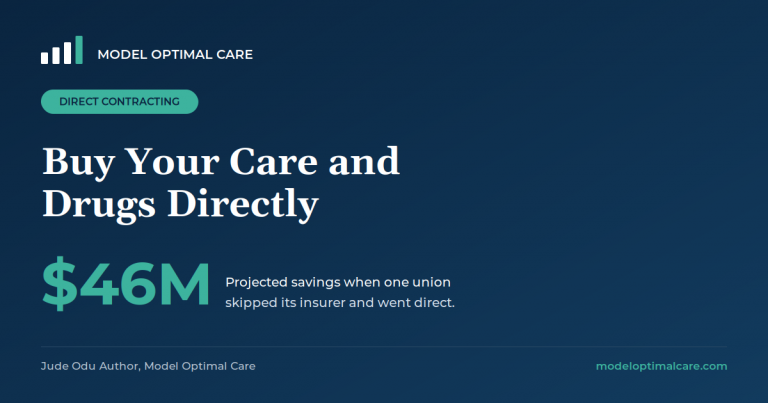
Model Optimal Care: Buy Your Care and Drugs Directly, $46M projected savings when one union skipped its insurer and went direct
On July 1, Congress held a hearing on direct contracting. Five days earlier, a New York union skipped its insurer, went straight to a hospital system, and put itself on track to save $46 million. You can do the same with both care and pharmacy. Here is how direct sourcing works, and why it is the fiduciary oversight your plan already owes its members.

July 8, 2026
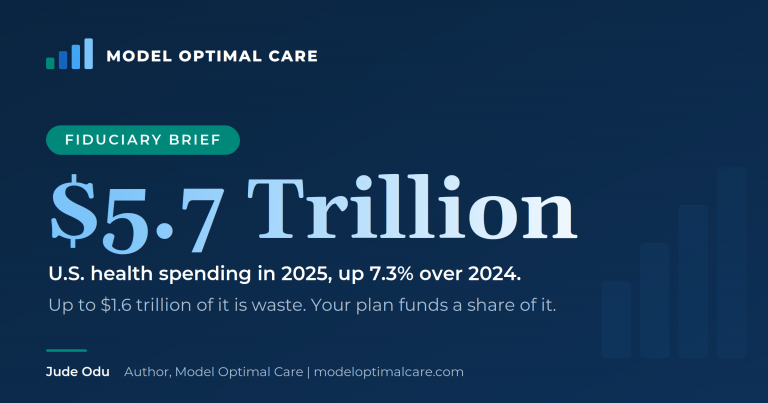
Model Optimal Care Fiduciary Brief: $5.7 Trillion U.S. health spending in 2025, up 7.3% over 2024. Up to $1.6 trillion of it is waste. Your plan funds a share of it
CMS just reported the U.S. spent $5.7 trillion on health care in 2025, up 7.3% over 2024. My book Model Optimal Care projected $5.6 trillion, so the waste math holds, and the top of the $760 billion to $1.6 trillion range now sits even higher. This problem isn't going away soon. Here is what self-funded employers should do now.
June 28, 2026
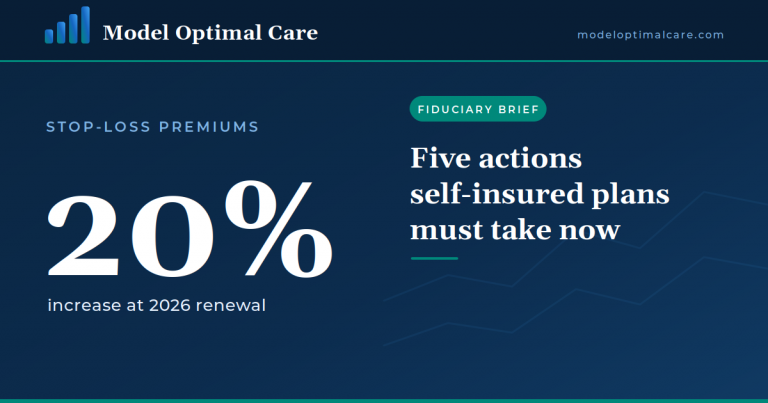
Stop-Loss Premiums Jumped 20% in 2026: Five Actions Self-Funded Plans Must Take Now
Stop-loss renewals are climbing in 2026 as million-dollar claims rise 29%. Five steps self-funded plans can take now to control cost and meet ERISA duty.
June 1, 2026