Blog

Fiduciary Responsibility and Compliance

What ERISA and the CAA require of self-funded plan sponsors, and how to meet it with contracts, data and audits.

Six employers sued their TPA for their own claims data. Check four clauses in your contract before renewal.
Six large employers went to court to get their own claims data from UnitedHealth. Here are four contract clauses to check and five tests to run on your plan's data before renewal.
November 9, 2026
Gag clause attestation deadline, December 31, with the Model Optimal Care logo
Your TPA can file this year's gag clause attestation, but the statement is yours. Here is what to check in your contracts before December 31.
October 26, 2026
I Built the Platform I Have Been Writing About. MOC Fiduciary Intelligence Is Live.
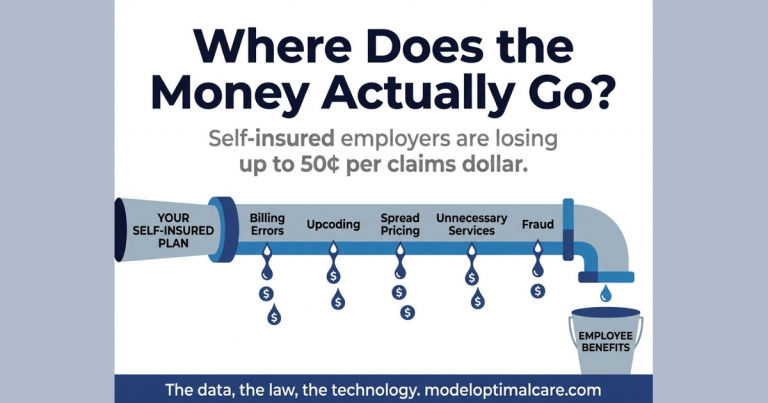
For years I have written some version of the same paragraph on this blog. Your plan is bleeding money. The law already gives you the authority to find it. Then the post ends and the work is still yours. That changed on September 8. MOC Fiduciary Intelligence is live.
September 11, 2026
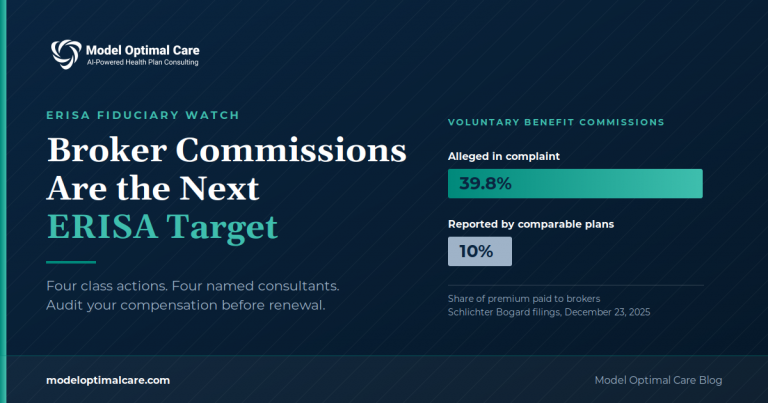
Broker Commissions Are the Next ERISA Target. Audit Yours Before Renewal.
On December 23, 2025, Schlichter Bogard sued four large employers and named their benefits consultants alongside them. Plaintiffs allege brokers took 22 to 40% of premiums on voluntary benefits while comparable plans paid about 10%. The breach was not what the broker did. It was what the employer never asked. Here is what to request before renewal.
August 5, 2026
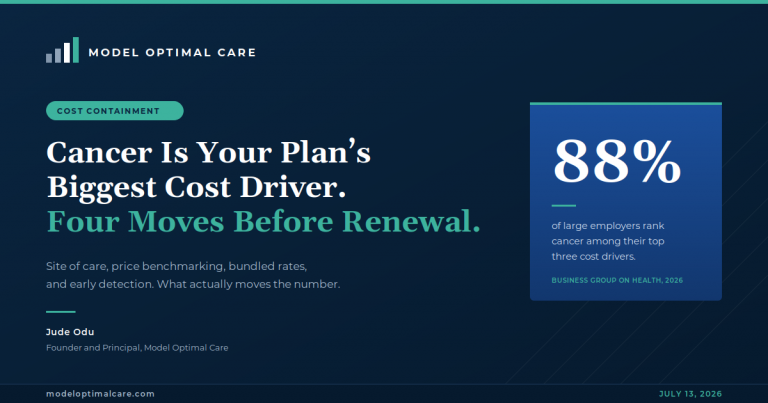
Model Optimal Care infographic: Cancer Is Your Plan's Biggest Cost Driver. Four Moves Before Renewal. 88% of large employers rank cancer among their top three cost drivers (Business Group on Health, 2026)
For the fourth year running, cancer is the top condition driving cost in employer health plans. Eighty-eight percent of large employers now rank it among their top three. Raising a deductible does not change what your plan pays for an oncology episode. It changes who writes the first check. Here are four moves to make before your next renewal: find where the dollars actually go, benchmark drug prices against public data, build a Center of Excellence path, and treat cancer screening as a cost strategy.

July 12, 2026
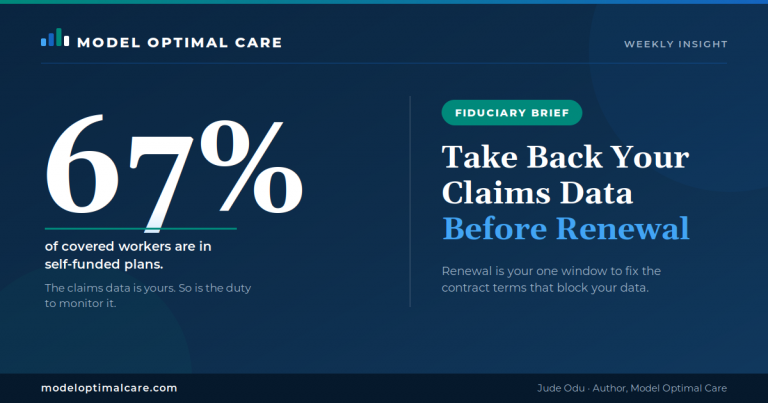
Your TPA Controls Your Claims Data. Take It Back Before Renewal.
Your TPA controls your claims data, and renewal is the only point each year when you can change that. With 67% of covered U.S. workers in self-funded plans, your data is a plan asset you must monitor. This post shows what your contract may be hiding, what the law now requires, and concrete steps to take before you sign off on that next renewal.
June 22, 2026
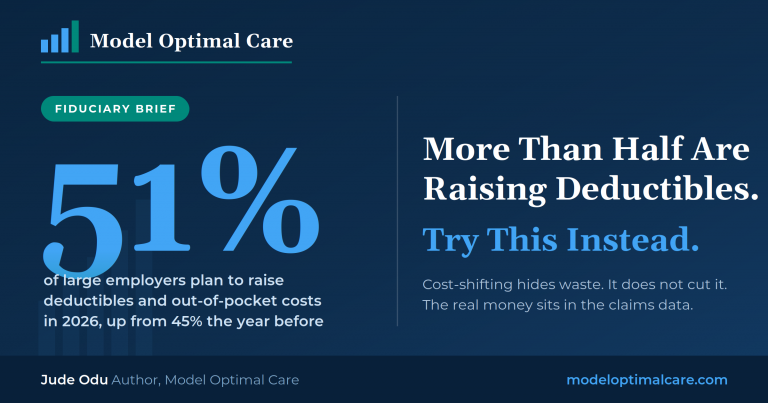
Model Optimal Care Fiduciary Brief: 51% of large employers plan to raise deductibles and out-of-pocket costs in 2026, up from 45% the year before. More Than Half Are Raising Deductibles. Try This Instead. Cost-shifting hides waste. It does not cut it. The real money sits in the claims data
Mercer says employer health costs will top $18,500 per worker in 2026, and 51% of large employers are responding the same way: raise the deductible. That move does not cut cost. It shifts it onto your employees and leaves the waste untouched. With 25% to 30% of healthcare spending wasted, the real savings sit in your own claims data. Here are five actions that cut real cost this year.
June 8, 2026
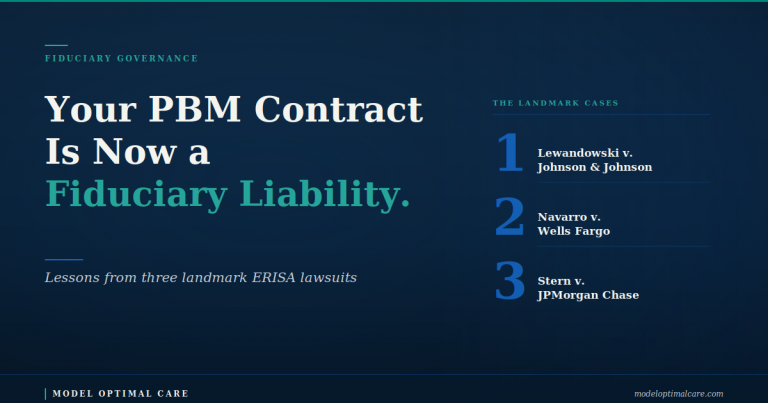
Your PBM Contract Is Now a Fiduciary Liability: Lessons from Three Landmark Lawsuits
Johnson and Johnson. Wells Fargo. JPMorgan Chase. Three of the most sophisticated companies in the country, with full legal departments and dedicated compliance teams.
May 18, 2026
Insights on Healthcare Cost Containment, Fiduciary Strategy, and the Future of Employer-Sponsored Health Plans
This blog exists for one reason. Self-funded employers, brokers, third-party administrators, and benefits leaders are operating in the most consequential moment in the history of employer-sponsored healthcare.
May 5, 2026
CAA 2026 Changed the PBM Rules: Five Things Every Self-Funded Plan Sponsor Must Do Now
On February 3, 2026, the Consolidated Appropriations Act of 2026 was signed into law.
April 24, 2026