
Broker Commissions Are the Next ERISA Target. Audit Yours Before Renewal.
By Jude Odu
August 5, 2026
On December 23, 2025, the law firm Schlichter Bogard filed four ERISA class actions in a single day. The defendants were not small companies. They included United Airlines, Laboratory Corporation of America, Community Health Systems, and Universal Services of America, better known as Allied Universal.
Each complaint also named the employer’s benefits consultant. Mercer Health and Benefits Administration was named with United Airlines. Willis Towers Watson US was named with Labcorp. Gallagher Benefit Services was named with Community Health Systems. Mercer and Lockton Companies were both named with Allied Universal.
Those cases have moved through 2026, and the industry is reacting. Writing on KevinMD on July 24, 2026, Paul Pender, MD, said it directly: the fees paid to brokers as retention bonuses are now audit targets. What your broker earns is no longer a background detail. It is a fiduciary exposure you are expected to measure and document.
What the complaints actually allege
The numbers in these filings are specific. Plaintiffs allege brokers received commissions ranging from 22 percent to 40 percent of premiums on employee-paid voluntary benefits such as accident, critical illness, cancer, and hospital indemnity coverage.
In the Allied Universal case, the complaint puts combined compensation to Mercer and Lockton at roughly $23 million from 2019 through 2024, averaging almost 40% of premiums. Comparable plans reported paying about 10% for the same products. In the United Airlines case, the complaint alleges Mercer collected more than $14 million between 2020 and 2024, or roughly 36% of premiums.
The alleged result: participants paid premiums 30% to more than 600% higher than equivalent coverage available elsewhere. The theory of liability does not turn on anything illegal the broker did. It turns on what the employer failed to do. The complaints assert that the plan fiduciary never monitored the commissions, never negotiated the arrangement, never benchmarked the loss ratios, and kept no record of a review. Under ERISA, that is the breach.
The disclosure rule you already have to follow
ERISA Section 408(b)(2)(B), added by the Consolidated Appropriations Act of 2021, requires any broker or consultant who reasonably expects to receive $1,000 or more in direct or indirect compensation from a group health plan to disclose that compensation in writing before the contract is entered into, extended, or renewed. The threshold is low. Nearly every broker arrangement clears it.
The consequence of a missing disclosure is severe. When a covered service provider fails to disclose, the arrangement is not reasonable, and the statutory exemption under 408(b)(2) does not apply. That converts an ordinary service contract into a prohibited transaction. The obligation to notice the gap sits with you, not with the broker.
The rule just got wider
The Consolidated Appropriations Act of 2026, signed February 3, 2026, expanded the definition of a covered service provider well past brokers and consultants. It now reaches vendors that provide plan design, insurance product selection, recordkeeping, medical management, stop-loss insurance, pharmacy benefit management, wellness design, transparency tools, group purchasing arrangements, disease management, employee assistance programs, and third-party administration. Congress set no delayed effective date for that provision. It applies to contracts entered into, extended, or renewed after February 3, 2026.
The PBM provisions of the same law run on a longer clock. Full rebate pass-through and semiannual drug-level reporting take effect for plan years beginning on or after August 3, 2028, which means January 1, 2029, for calendar-year plans.
A separate Department of Labor proposed rule, Improving Transparency into Pharmacy Benefit Manager Fee Disclosure, published January 30, 2026, would move faster. As proposed, it would apply to plan years beginning on or after July 1, 2026. The comment period closed April 15, 2026 with 564 comments filed, and no final rule has been issued. Treat that timeline as direction, not as a deadline you have already missed.
The pattern across all three is the same. Every dollar a vendor earns from your plan is becoming a disclosed, reviewable number.
Where the compensation actually hides
Base commission sits on a fee schedule and your CFO has probably seen it. The compensation driving these lawsuits sits in categories most plan sponsors never request.
Contingent and override compensation. The carrier pays this based on the broker’s total book of business, not your plan’s performance. You never see an invoice, but your premium funds part of it.
Persistency and retention bonuses. The carrier pays these when the broker keeps you in place. That is a direct financial incentive against marketing your plan competitively.
Dual compensation on voluntary benefits. The broker collects a consulting fee from you and a commission from the carrier it recommended to you. The Schlichter complaints call this self-dealing at the expense of participants.
Commission embedded in premium. When compensation is built into rates rather than billed as a fee, it never appears in your budget as a line item. It still comes out of plan assets.
Things to do before your next renewal
- Request the 408(b)(2)(B) disclosure in writing, with a deadline. Ask for direct and indirect compensation, including contingent, override, bonus, and carrier-paid amounts, for the last three plan years and the coming one. Set a response date at least 60 days before renewal.
- Benchmark what you find. Convert total compensation to a per-employee-per-month figure and compare it against market. On voluntary benefits, a 40% commission against a 10% norm is not a negotiating position. It is a documented overpayment.
- Move to a flat fee where you can. A fixed dollar amount removes the incentive to place you with the highest-paying carrier and makes reasonableness far easier to defend.
- Review voluntary benefits separately. These products carry the highest commission rates and the least scrutiny. Pull the loss ratios. The United Airlines complaint alleges loss ratios below 50 percent on the products at issue. When a carrier pays out less than half of every premium dollar, your employees will fund the difference.
- Put it in the minutes. Record what you requested, what you received, what you compared it to, and what you decided. ERISA judges the process, not just the outcome. An undocumented good decision offers you no protection.
The cost math still points in the same direction
Mercer projects total health benefit cost above $18,500 per employee in 2026, a 6.7 percent increase over the $17,496 average in 2025. The Business Group on Health puts the underlying trend at a median of 9 percent, trimmed to 7.6 percent only after plan design changes. Against those numbers, broker compensation looks small, but that misses the point entirely. A broker paid to keep you where you are will not bring you the network change, the PBM audit, or the carrier move that reduces your spend. The commission is the smaller loss. The advice it buys you is the larger one.
In Model Optimal Care: End U.S. Healthcare Waste, One Health Plan at a Time, the first two principles are Transparency and Accountability, in that order. You cannot hold a vendor accountable for costs you cannot see. National healthcare waste runs around $1.6 trillion a year, and much of it survives because nobody with fiduciary authority asked for the numbers.
Send the disclosure request this week. Renewal season is when your negotiating position is strongest.
Sources
- Schlichter Bogard LLC complaints filed December 23, 2025 (N.D. Ill. and S.D.N.Y.), as reported by Ropes & Gray, Quarles, Frier Levitt, PLANSPONSOR, and Bloomberg Law.
- ERISA Section 408(b)(2)(B), Consolidated Appropriations Act of 2021.
- Consolidated Appropriations Act of 2026, signed February 3, 2026; analysis by Trucker Huss, Segal, Mintz, and Ogletree.
- U.S. Department of Labor, Improving Transparency into Pharmacy Benefit Manager Fee Disclosure, proposed rule, 91 Fed. Reg., published January 30, 2026.
- Mercer, 2025 National Survey of Employer-Sponsored Health Plans.
- Business Group on Health, 2026 Employer Health Care Strategy Survey.
- Paul Pender, MD, Self-insured employer health plans face a new reckoning, KevinMD, July 24, 2026.
- Shrank, Rogstad, and Parekh, Waste in the US Health Care System, JAMA, 2019; CMS National Health Expenditure data.
Stay Informed
Get The MOC Brief, the twice-weekly healthcare policy analysis for self-insured professionals and healthcare leaders committed to eliminating waste and optimizing care delivery.
About the author

Jude Odu
Founder of Health Cost IQ and author of Model Optimal Care. 25+ years in healthcare technology.
Learn more at judeodu.com
Categories
The Book
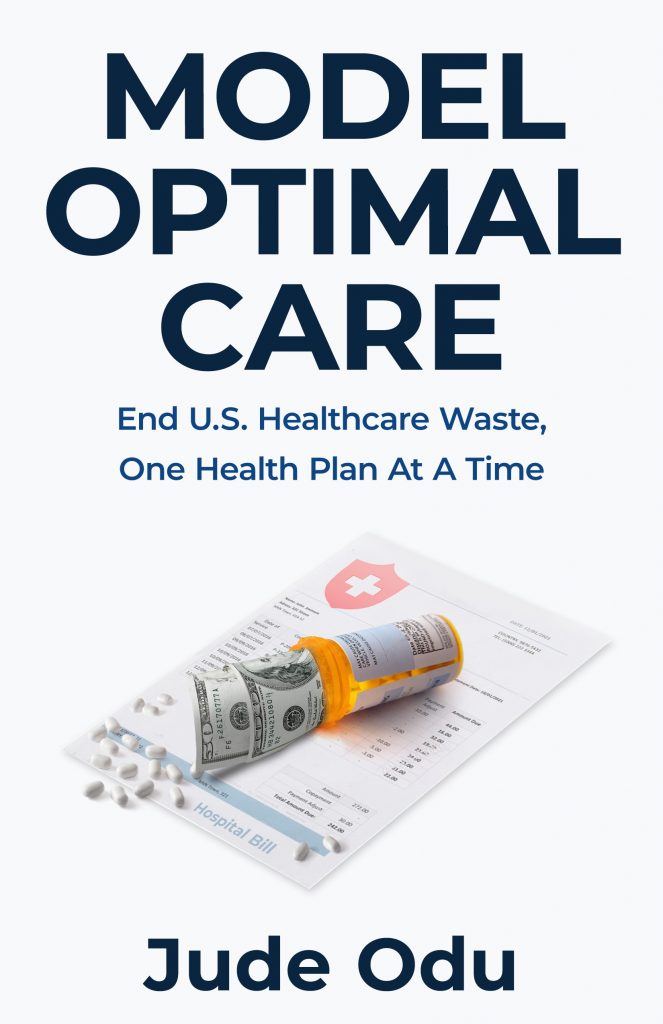
The definitive guide to ending U.S. healthcare waste. One health plan at a time.