
The MOC Academy Is Open: Training That Keeps the Self-Funded Community Current
By Jude Odu
October 26, 2026
CMS projects that U.S. healthcare spending reached $5.7 trillion in 2025. At the 25 to 30 cents of every dollar that researchers attribute to waste, that is as much as $1.7 trillion a year, or about $4.7 billion every day. Self-funded employers carry a large share of that bill. KFF’s 2026 Employer Health Benefits Survey, released October 22, found that 71 percent of workers with employer health coverage are now in self-funded plans, including 85 percent at firms with 200 or more workers.
The people who run, advise, and administer those plans are expected to know where that money goes. Most of them learned the job under rules that have since changed.
Model Optimal Care has opened The MOC Academy at MOClearn.com, an online training library for everyone who works with or advises self-funded health plans. It launches with ten programs and 184 hours of training: the Certified Professional in Model Optimal Care (CP-MOC) designation and nine focused courses, two of them free.
The rules moved. Training has to move with them.
In 2026 alone, Congress rewrote the rules for pharmacy benefit managers, and Medicare began testing artificial intelligence in prior authorization. Fiduciary lawsuits over prescription drug costs have already named Johnson & Johnson, Wells Fargo, and JPMorgan Chase. The job changed. A plan sponsor who last studied it five years ago is working from rules that no longer hold.
Every Academy program teaches one method, drawn from Jude Odu’s book Model Optimal Care: End US Healthcare Waste, One Health Plan at a Time. The book was written to be current. Ernie Clevenger, President and Publisher of MyHealthGuide and a past president of both the Health Care Administrators Association and the Self-Insurance Institute of America, wrote in his early praise that for longtime practitioners it “delivers current methods, innovations, and practical arguments that sharpen how we serve the self-funded community.”
A book, though, is fixed the day it prints. The Academy is how that method stays current.
Current by design
The MOC Academy doesn’t replace the conferences and association programs the industry relies on. It adds a library built around four commitments.
- Everything is dated and sourced. Every course carries update cards that show what has changed since the book was published, and every figure names its source.
- Courses are reviewed on a schedule. Fast-moving courses, such as AI, pharmacy, and stop-loss, are reviewed and updated every January and July. The rest are reviewed each January.
- Testing is fair. Quiz and exam questions test only stable facts, so no student is graded on a number that changed last month.
- Students learn on a working case. Every course follows Northfield Components, a fictional employer, through its first self-funded years. Hands-on exercises run in MOC Fiduciary Intelligence, Model Optimal Care’s AI platform, on Northfield’s documents at no added cost. No one uploads real member data.
Each of the nine courses earns a Certificate of Completion verifiable at MOClearn.com/verify, and every program’s hours count toward CP-MOC recertification.
Six programs built for this year’s problems
CP-MOC, Certified Professional in Model Optimal Care
The flagship designation. About 100 hours across six modules and a 105-question final exam. Holders learn to assess a self-funded plan against the five Model Optimal Care principles and the duties ERISA and the Consolidated Appropriations Act place on sponsors, and earn a designation an employer can verify. It renews every two years with 30 continuing education hours.
Becoming Self-Funded (free)
For employers weighing the move at renewal. It covers whether, when, and how to self-fund, and learners model their own plan in the analyze.health cost model.
AI for Health Plan Sponsors
Medicare’s WISeR model began using AI to review prior authorization requests in six states on January 1, 2026, and lawsuits over insurers’ denial algorithms are moving through the courts. This course teaches what predictive models and AI tools can do, where they fail, what the law and your contracts require, and how to run a 90-day pilot.
Fiduciary Oversight of Group Health Plans
ERISA and CAA duties, committee practice, documented decisions, and vendor monitoring, taught alongside the lawsuits that show what plaintiffs now allege against plan sponsors.
Pharmacy Benefit Oversight
The Consolidated Appropriations Act, 2026, signed February 3, requires pharmacy benefit managers to pass 100 percent of rebates through to ERISA plans and to report to plan sponsors on a set schedule. The rules apply to plan years beginning on or after August 3, 2028, which means January 1, 2029 for calendar-year plans. The course covers PBM contracts, audit rights, formulary waste, and specialty and GLP-1 spending.
Stop-Loss and Captive Oversight for Self-Funded Plans
How to read, monitor, and renew stop-loss coverage and judge a group captive proposal. The need is real. In the Self-Insurance Institute of America’s 2026 Captive Industry Survey, 15 of 16 brokers without captive clients said they want more education about captives, and brokers who already place captives named their clients’ lack of understanding as the top barrier (16 of 35). Captive managers, carriers, and group captive members can use the course as a shared reference.
The catalog also includes Price Transparency and Provider Pricing; Claims Payment Integrity and Fraud, Waste, and Abuse; Utilization, ER Redirection, and Care Management; and Benefits Literacy for HR Teams, which is free.
Who the Academy serves
It serves the plans themselves, from plan sponsors and CFOs to benefits committees and HR teams. It serves those who advise and administer them, including brokers, consultants, TPAs, stop-loss carriers, and captive managers. And it serves anyone in the self-funded community who wants current knowledge of the industry’s trends and new methods. Organizations can buy corporate seats at volume pricing.
“A book is fixed the day it prints. The rules that govern these plans keep moving. The MOC Academy keeps the method current, course by course, so the people who sponsor, advise, and study self-funded plans learn what applies this year, with the evidence in front of them.”
Jude Odu, Founder and Principal, Model Optimal Care
Your employer may already pay for it
Many employers cover professional education through an educational assistance program under IRS Section 127, which can pay up to $5,250 per employee tax-free in 2026. Every Academy fee fits inside that limit, and each paid course page offers a ready-to-use reimbursement packet for download. Ask your HR or benefits team what your plan covers. CP-MOC holders and MOC-FI subscribers also receive discounts on paid courses.
Start where you are
The rules will keep moving either way. The only question is whether your team learns them in a course or at the next renewal.
Browse the catalog and start a free course at MOClearn.com.
Sources
- KFF, 2026 Employer Health Benefits Survey, October 22, 2026
- Centers for Medicare and Medicaid Services, National Health Expenditure Projections
- Shrank, Rogstad and Parekh, Waste in the US Health Care System: Estimated Costs and Potential for Savings, JAMA, October 2019
- Institute of Medicine, Best Care at Lower Cost: The Path to Continuously Learning Health Care in America, 2013
- Epstein Becker Green, 2026 Pharmacy Benefit Manager Reform: What Employers Need to Know, February 24, 2026
- Dinsmore and Shohl, Is AI WISeR? CMS Models AI-based Prior Authorization Process in Six States, December 22, 2025
- Self-Insurance Institute of America, 2026 Captive Industry Survey and Trend Report, appendix counts
Find the millions in waste hiding in your self-funded health plan
The MOC Fiduciary Intelligence (MOC-FI) AI agent reads your self-funded plan documents and claims data, scores your plan against 32 fiduciary indicators, identifies gaps and risk exposure, and shows you the exact dollars you can recover. Your first report is free.
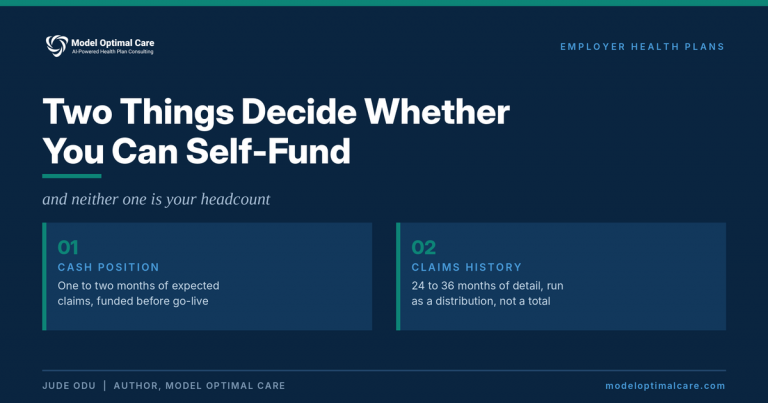
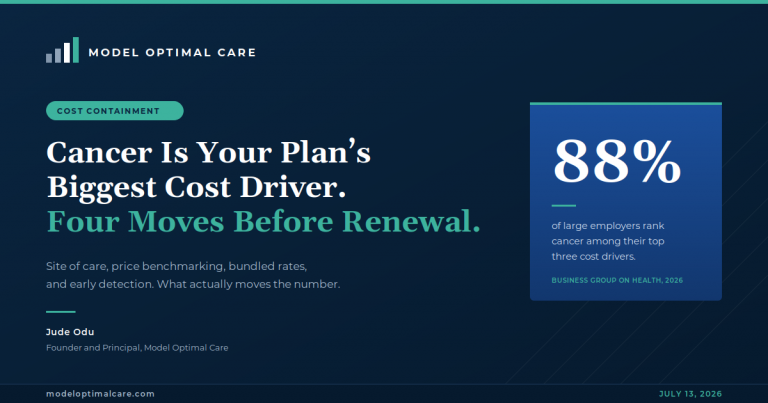
Every issue of The MOC Brief, the twice-weekly briefing for self-funded plan sponsors, is in the archive.
Newsletter
Get The MOC Brief in your inbox
Twice-weekly healthcare policy analysis for self-funded professionals and healthcare leaders committed to eliminating waste and optimizing care delivery.
We respect your privacy. Unsubscribe anytime.
About the author
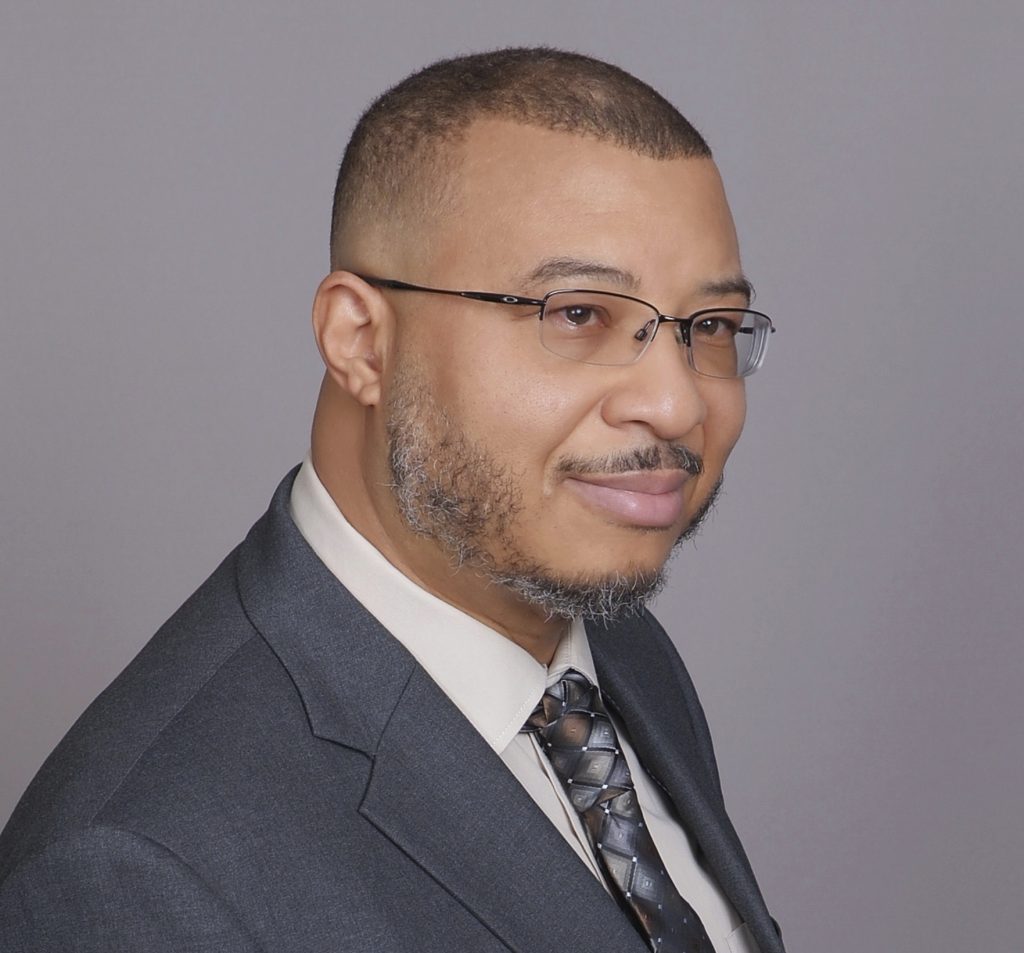
Jude Odu
Founder and Principal of Model Optimal Care and author of Model Optimal Care. 25+ years in healthcare technology.
Learn more at judeodu.com
The Book
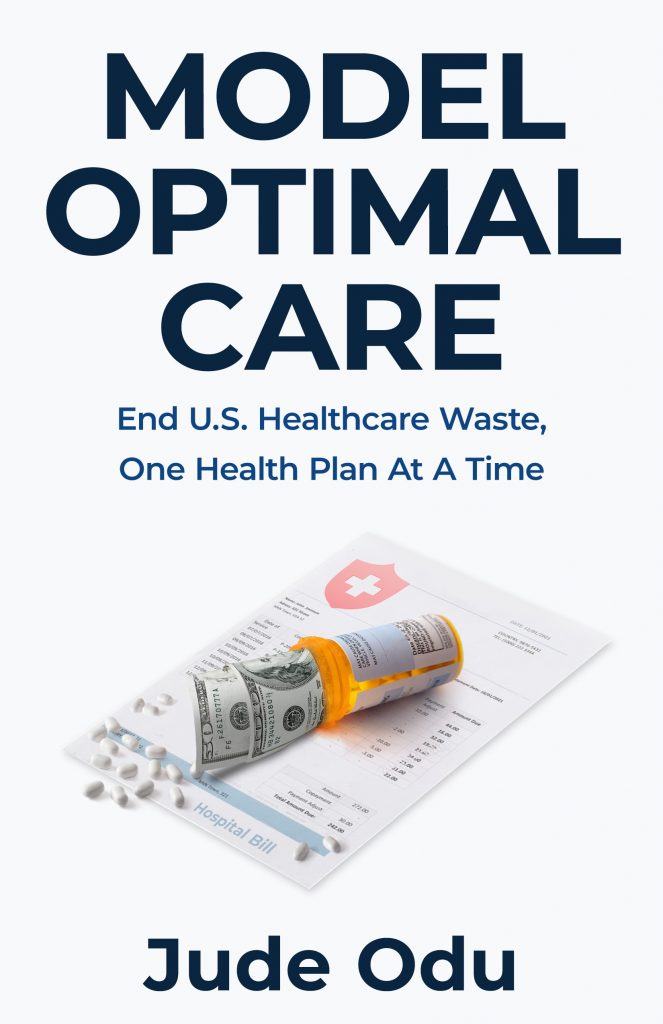
The definitive guide to ending U.S. healthcare waste. One health plan at a time.