
Congress Heard the Case for Direct Contracting. Your Plan Should Act on It.
By Jude Odu
July 9, 2026
On July 1, a House subcommittee held a hearing with a blunt title: “Direct Contracting: A Prescription for Lower Health Care Costs.” Five days earlier, Marketplace reported that a New York union had cut out its insurer, gone straight to a hospital system, and put itself on track to save $46 million. Two different arenas, one message. You do not have to buy care through the middle layer that sets the price. You can buy it directly. The savings are real, and the act itself is one ERISA already assigned you.
The Middle Layer Is Where Your Money Leaks
Family coverage now averages $26,993 a year (KFF, 2025). Employer health costs are projected to rise more than 9% in 2026, past $17,000 per employee (Aon). None of that is a law of nature. The 2019 JAMA study by Shrank, Rogstad, and Parekh put waste in the U.S. system at $760 billion to $935 billion a year, about a quarter of all spending, and pricing failure alone accounted for as much as $240 billion of it. The total waste number rises to over $1.6 trillion when finalized 2025 U.S. health expenditure numbers are considered.
The clearest evidence sits in hospital prices. RAND’s most recent round found that commercial plans paid hospitals an average of 254% of what Medicare would have paid for the same services in 2022, and prices in several states ran above 300%. Same care, same building, more than twice the price. That gap is not quality. It is the cost of buying through a network you never negotiated.
Direct Contracting Puts You Back at the Table
Direct contracting means you negotiate prices with a provider or health system yourself, instead of accepting whatever your carrier’s network hands you. Local 32BJ SEIU, which represents nearly 200,000 workers, did exactly that. It bypassed its insurer and contracted directly with Northwell Health. Marketplace reported that the union now pays about half as much for the same care and expects to save $46 million. Members feel it. One worker who paid $40 for every doctor visit now pays nothing at the contracted providers, because the union removed those co-pays to steer people toward high-value care.
This is not a union-only story. Northwell’s direct arm now holds contracts with 70 companies covering about 300,000 patients. Elizabeth Mitchell of the Purchaser Business Group on Health, quoted in the same report, put mature direct-contract savings at 10% to 30%. At the July hearing, the head of the ERISA Industry Committee described a direct primary care arrangement at one member employer that cut emergency room use by 14%. The models vary. The result repeats. When you contract for care directly, you set the price, and you can point members toward the providers who deliver the most value.
Alternative Sourcing Does the Same Thing for Your Pharmacy Spend
Your pharmacy benefit hides the same middle layer. The three largest PBMs process nearly 80% of U.S. prescriptions, and they profit from spread you cannot see. Alternative sourcing breaks that pattern. You buy drugs from a transparent supplier and pay a price the supplier discloses.
A market has grown up around this idea, and you have options. The Mark Cuban Cost Plus Drug Company, a public-benefit corporation launched in 2022, publishes what it pays for each drug and adds a fixed 15% markup plus a flat shipping fee. A peer-reviewed study in the Annals of Internal Medicine compared roughly 62 million 2024 prescription claims against Cost Plus prices and found that once a member’s out-of-pocket cost for a generic passed $15, buying direct was cheaper about 80% of the time. For high-cost generics, the typical insured patient paid about $140 while the direct price was about $25. Limitless Rx Solutions takes a different angle. It analyzes a plan’s own claims to target the 1% to 2% of medications that drive more than half of drug spend, then re-sources those without changing the plan design.
Naming these vendors is not the point. The point is that transparent, pass-through pharmacy sourcing is now a real market, and each option hands you a price you can verify. Five years ago that market barely existed. Today it is a tool you can put to use immediately.
Why This Is Fiduciary Oversight, Not Cost-Cutting Alone
Under ERISA and the Consolidated Appropriations Act, you are the fiduciary for your plan. You owe participants a duty to know what you pay and to prove you acted prudently. Direct contracting and alternative sourcing are how that duty shows up in practice. They line up with the five principles of Model Optimal Care.
- Transparency. A directly negotiated rate and a published drug price are numbers you can see, not spread you have to trust.
- Accountability. You hold a provider or supplier to terms you set, and you record why you chose them.
- Integration. Your claims data, your contracts, and your plan design work as one system instead of three disconnected ones.
- Engagement. Incentives like waived co-pays steer members toward high-value care, which is the union’s entire method.
- Technology Enablement. You use claims analytics and public benchmarks to find the gap and to prove the savings.
The witnesses at that hearing named the biggest barrier plainly. Employers often cannot get their own plan and spending data. You cannot contract for a better price if you cannot see the price you are already paying today. That is the first fiduciary failure to fix.
What to Do This Quarter
Pull your claims data and identify your highest-volume providers and your largest drug spend. Benchmark your hospital prices against Medicare rates, since RAND has already shown the multiple often sits above 2.5. Ask one high-value health system in your main location whether it will contract directly, and model the savings the way the union did. On pharmacy, pull your net cost per unit on your top generics after rebates and compare it against published direct prices. Read your PBM contract for the audit rights the CAA now guarantees, and don’t be afraid to use them.
You do not need 200,000 members to start. You need your data, a vendor you can partner with and hold accountable, and the will to act on both. Congress spent a morning making the case. The union already proved it works. Your move is to run the numbers on your own plan, then act.
More about this topic can be explored in the book, Model Optimal Care: End U.S. Healthcare Waste, One Health Plan at a Time, by clicking here.
get Moc Insights
Get the latest healthcare policy analysis for self-insured professionals and healthcare leaders committed to eliminating waste and optimizing care delivery.
About the author

Jude Odu
Founder of Health Cost IQ and author of Model Optimal Care. 25+ years in healthcare technology.
Learn more at judeodu.com
Categories
The Book
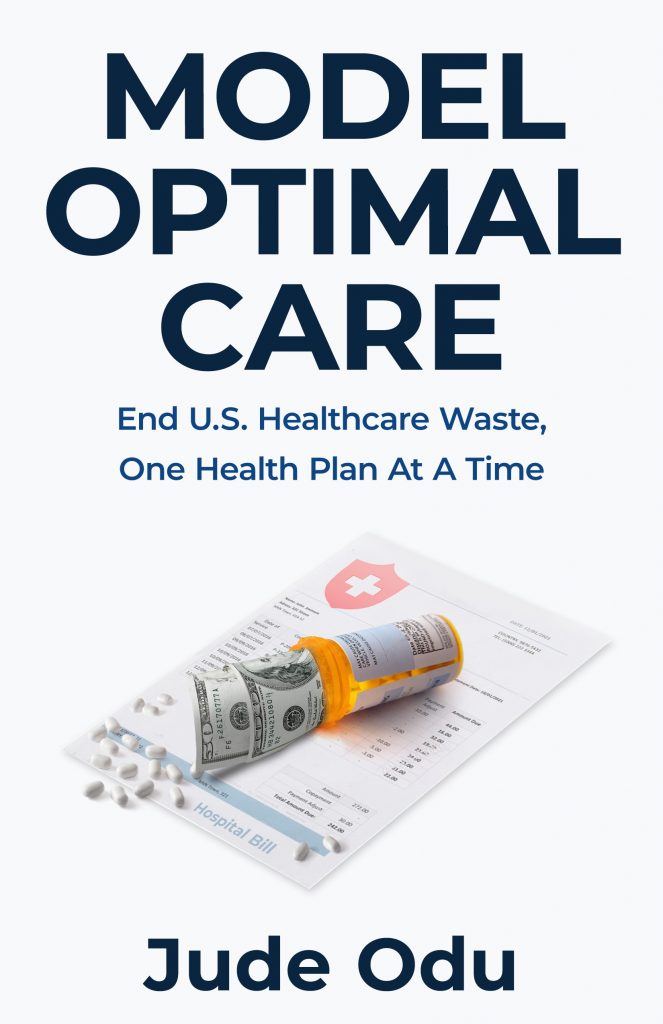
The definitive guide to ending U.S. healthcare waste. One health plan at a time.